
Food insecurity is a real and growing problem in Chicago. According to recent reports, about one in five households in the Chicago area faces food insecurity, and roughly 25% of people in the region struggle to consistently access enough food. Rising grocery prices (up 20%) and rent costs (up 27%) have contributed to this crisis. In fact, more than one-third of Chicago-area households cannot afford the basic cost of living, putting approximately 1.4 million households at risk of food insecurity. [chicagosfoodbank.org], [chicago.suntimes.com]
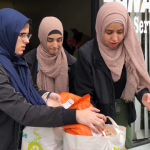
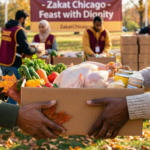
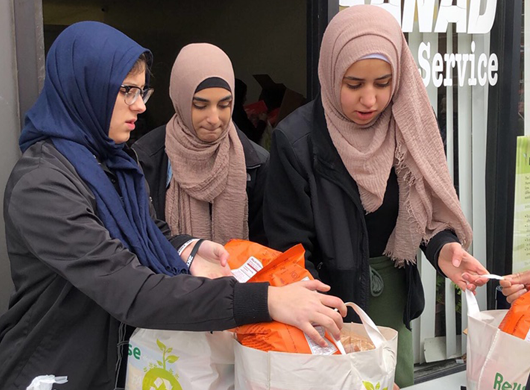
Zakat Chicago has, through the years, taken strategic and comprehensive food alleviation programs into consideration. Zakat Chicago supports several Muslim-owned and operated food pantries across Chicagoland that provide fresh and dry foods in addition to halal poultry and meats—culturally relevant food for zakat-eligible individuals and families.
In addition to supporting year-round food aid, we also support special Ramadan food boxes and iftar meals to help Muslims observing the fasts during the month of Ramadan. These boxes allow individuals and families to prepare halal and nutritious iftar and suhoor meals.
In 2025, due to recent changes and the temporary suspension of SNAP benefits, many refugee and asylum-seeking families and Violence Against Women’s Act (VAWA) recipients are now unqualified for SNAP benefits. Even those who remain qualified face decreased benefits, leading them to turn to faith-based organizations for help. In response to this crisis, Zakat Chicago provided emergency grants to its food pantry partners to support such beneficiaries.
The Prophet Muhammad (peace and blessings be upon him) emphasized the virtue of feeding others, saying:
أَطْعِمُوا الْجَائِعَ، وَعُودُوا الْمَرِيضَ، وَفُكُّوا الْعَانِيَ
“Feed the hungry, visit the sick, and set free the captives.” (Sahih al-Bukhari, 5373)